
5 Essential Steps for Effective Strategic Planning
Strategic planning is vital for any organization aiming to succeed. It provides a roadmap for achieving long-term goals.
But what exactly is strategic planning? It’s a structured process that guides decision-making and resource allocation.
This process involves several key steps. Each step plays a crucial role in shaping a business strategy.
Understanding these steps can enhance strategic management efforts. It helps align resources with organizational goals.
The strategic planning process is not just for large corporations. Businesses of all sizes can benefit from it.
It encourages proactive management and fosters innovation. By following a strategic plan, organizations can gain a competitive edge.
This guide will explore the five essential steps in strategic planning. We’ll delve into how each step contributes to business success.
Join us as we uncover the secrets to effective strategic planning.
What is Strategic Planning?
Strategic planning is a systematic approach for outlining an organization’s direction. It defines what the organization wants to achieve and how to get there.
This process involves setting clear goals and objectives. It includes identifying the resources needed and determining the actions required to meet those goals.
Strategic planning is essential for ensuring that all aspects of an organization work harmoniously. It links individual efforts to the broader organizational vision.
Key Elements of Strategic Planning:
- Vision Statement: Describes what the organization aims to become.
- Mission Statement: Outlines the organization’s purpose and core values.
- Goals and Objectives: Specific outcomes the organization strives to achieve.
- Resource Allocation: Determining how and where to use resources effectively.
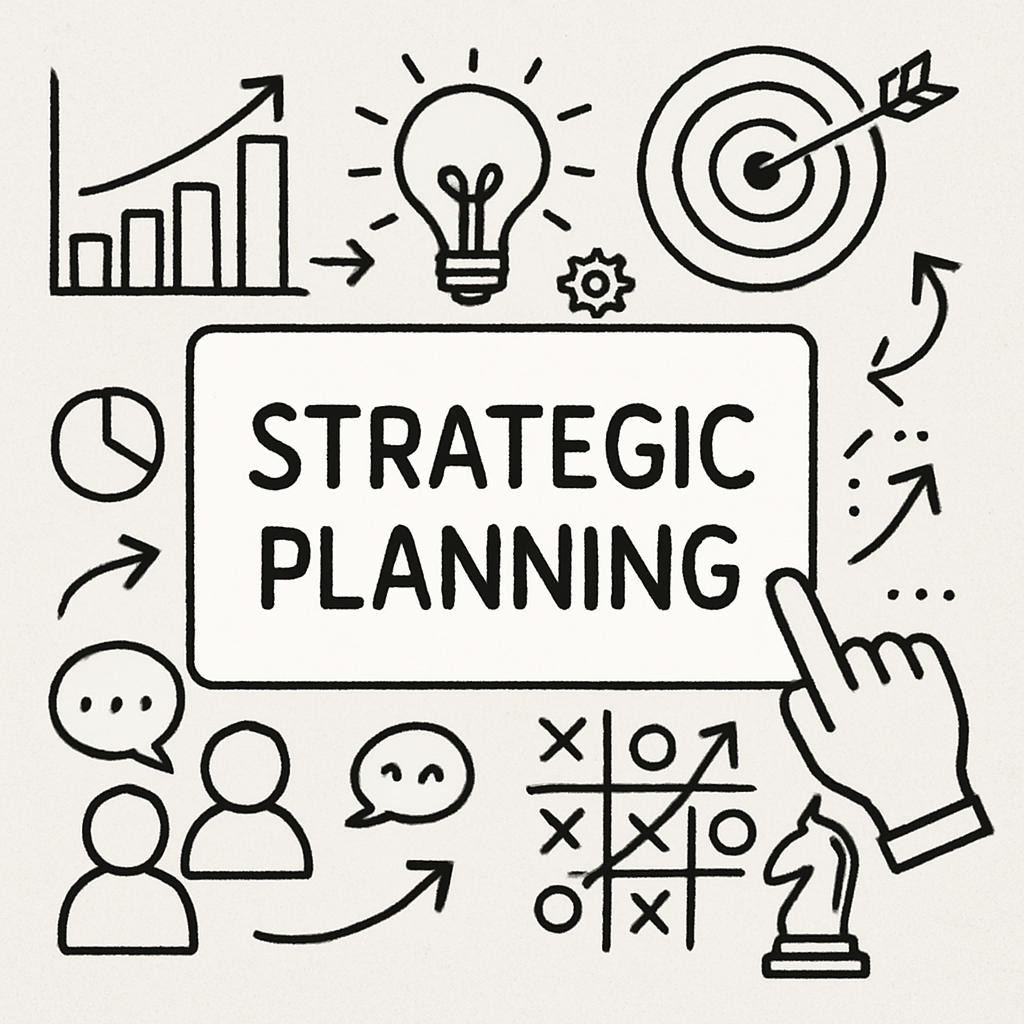
Its role extends beyond merely setting goals. Effective strategic planning includes analyzing both internal and external environments. This analysis helps in foreseeing challenges and opportunities.
Why Strategic Planning Matters in Business Strategy
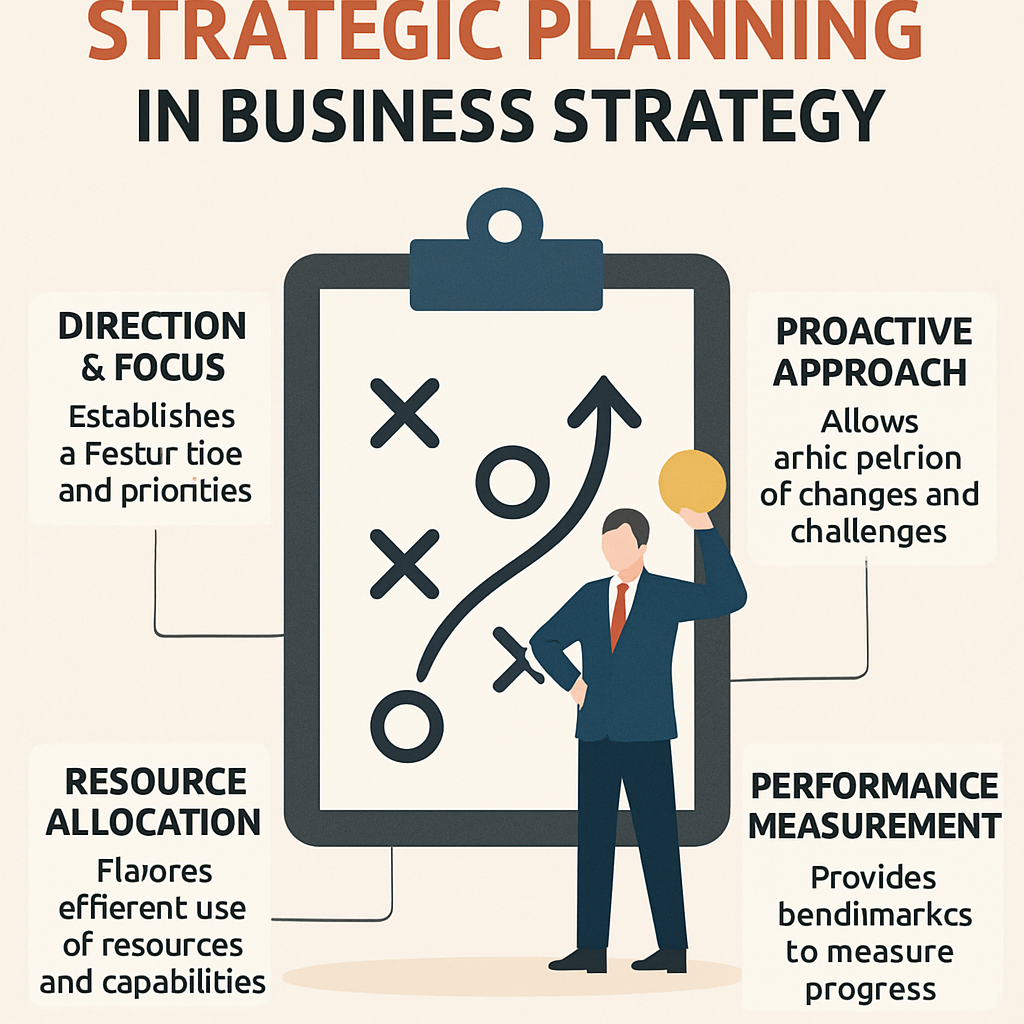
Strategic planning is a vital part of business strategy. It enables organizations to set priorities and allocate resources. A well-structured plan helps focus efforts on core goals.
By using strategic planning, businesses can improve decision-making processes. This process ensures that all employees strive toward common objectives. It leads to a unified organizational direction.
Key Benefits of Strategic Planning:
- Enhanced Decision-Making: Provides a framework for evaluating options.
- Resource Allocation: Helps determine where to invest time and money.
- Proactive Management: Allows businesses to foresee and adapt to changes.
- Goal Alignment: Ensures everyone works towards the same objectives.
Without strategic planning, businesses may struggle to adapt to market changes. This can lead to lost opportunities and inefficiencies. A strategic plan creates a roadmap, guiding businesses through challenges and toward growth.
Overview: The Five Steps in the Strategic Planning Process
The strategic planning process is essential for successful business strategy. It involves five key steps that guide organizations in achieving their goals. Each step builds upon the previous one, ensuring a cohesive plan.
The Five Steps:
- Setting Objectives: Define mission and vision.
- Analyzing the Environment: Conduct a SWOT analysis.
- Formulating Strategy: Create long-term plans.
- Implementing the Strategy: Allocate resources effectively.
- Evaluating and Controlling Performance: Monitor and adapt plans.
These steps form a cycle that requires ongoing attention. As market conditions change, strategies need to adapt and evolve. Businesses that regularly follow this process can achieve strategic management success.
Step 1: Setting Objectives (Mission and Vision)
Setting clear objectives is the foundation of strategic planning. Organizations begin by crafting mission and vision statements. These statements provide direction and purpose.
The mission statement defines the organization’s core purpose. It answers why the organization exists. It should be clear and inspiring.
A vision statement outlines the future aspirations. It describes what the organization aims to achieve. The vision should be ambitious yet achievable.
Elements of a Mission Statement:
- Core values of the organization
- Description of the primary business
- Target audience and value proposition
Characteristics of a Vision Statement:
- Future-oriented and aspirational
- Simple and comprehensible
- Reflects the organization’s desired image
Crafting these statements involves input from various stakeholders. Employees, customers, and partners can offer valuable insights. This involvement can increase buy-in and alignment.

by Glen Carrie (https://unsplash.com/@glencarrie)
Once established, these statements guide decision-making. They serve as a benchmark for evaluating strategic opportunities. Clearly defined objectives support a unified direction.
With mission and vision clearly articulated, organizations can focus efforts. This clarity enhances motivation and aligns resources effectively. Properly set objectives lead the way for successful strategic management.
Step 2: Analyzing the Environment (SWOT and Beyond)
Analyzing the environment is a crucial step in strategic planning. This involves understanding both internal and external factors. A popular tool for this analysis is SWOT.
SWOT stands for Strengths, Weaknesses, Opportunities, and Threats. It helps organizations identify key areas for improvement. This analysis is vital for informed decision-making.
Components of SWOT Analysis:
- Strengths: Internal capabilities and resources
- Weaknesses: Areas for improvement within the organization
- Opportunities: External factors the organization can exploit
- Threats: External factors that could negatively impact the organization
Beyond SWOT, other tools can enhance environmental analysis. PESTLE analyzes Political, Economic, Social, Technological, Legal, and Environmental factors. Porter’s Five Forces assess industry dynamics and competitive forces.
Additional Analysis Tools:
- PESTLE Analysis: Broader macro-environmental scanning
- Porter’s Five Forces: Industry competition and attractiveness

by Milad Fakurian (https://unsplash.com/@fakurian)
Conducting a comprehensive analysis requires gathering data from reliable sources. This might include market research, financial reports, and competitor analysis. A thorough understanding of the environment enables better strategic alignment.
Using these insights, organizations can devise strategies that leverage strengths and mitigate weaknesses. Recognizing opportunities and threats allows for proactive planning. This analysis supports a competitive advantage by preparing for changes in the market.
Step 3: Formulating Strategy
Formulating strategy is the next phase of the strategic planning process. Here, organizations devise a plan to achieve their objectives. This step requires creativity and practicality.
Developing a strategy involves setting long-term goals and selecting actions to reach them. It’s about defining how the business will compete in the market. This often involves considering different strategic options.
Key Considerations in Strategy Formulation:
- Competitive Positioning: Identifying unique value propositions
- Resource Allocation: Deciding where to invest and focus efforts
An organization’s strategy should align with its mission and vision. It should also reflect insights gained from environmental analysis. Strategy formulation can involve choices about markets, products, and partnerships.
For effective strategy formulation, organizations might use several frameworks. The Ansoff Matrix, for instance, helps decide whether to develop new products or enter new markets. Another tool, the Balanced Scorecard, links performance measures with strategy.
Common Strategy Frameworks:
- Ansoff Matrix: Growth strategies through new markets or products
- Balanced Scorecard: Aligning business activities with strategic vision
Strategic choices must be actionable and realistic. They should consider the resources and capabilities of the organization. Moreover, clear priorities should guide the strategy.

by Vitaly Gariev (https://unsplash.com/@silverkblack)
Finally, communication of the formulated strategy is essential. Stakeholders need to understand their roles in the plan. This ensures alignment and coordination in the strategy’s execution.
Step 4: Implementing the Strategy
Implementing the strategy transforms plans into actions. This stage is crucial for bringing the formulated strategy to life. It focuses on the practical execution of strategic initiatives.
Effective implementation requires allocating resources wisely. Organizations must provide the necessary tools, people, and support. Ensuring teams are prepared to act is essential for success.
Key Actions in Strategy Implementation:
- Resource Assignment: Designating financial, human, and material resources
- Task Delegation: Assigning responsibilities to teams and individuals
Communication plays a vital role during implementation. Clear guidance helps teams understand their objectives. It also fosters alignment and cooperation across the organization.
Organizations should establish systems to monitor progress. Tracking helps to identify any deviations from the plan. This proactive approach allows for quick corrective actions if needed.
Monitoring and Adjusting:
- Progress Tracking: Regularly reviewing performance against targets
- Feedback Loops: Gathering insights for continuous improvement
Challenges during implementation are common. Adapting to unforeseen obstacles can require agility. Flexibility helps to overcome issues without derailing progress.

by Vitaly Gariev (https://unsplash.com/@silverkblack)
Ultimately, successful implementation hinges on leadership. Leaders must motivate and inspire their teams. Their support is critical for maintaining momentum and achieving strategic goals. Through effective implementation, organizations can realize the benefits of their strategic plan.
Step 5: Evaluating and Controlling Performance
The final step in the strategic planning process is evaluating and controlling performance. This stage determines how effectively the strategy is working. It involves measuring results and making necessary adjustments.
Performance evaluation requires specific metrics. These metrics provide insight into progress and effectiveness. They highlight areas of success and those needing improvement.
Key Evaluation Metrics:
- Financial Outcomes: Revenue growth, profit margins
- Operational Efficiency: Cost management, productivity rates
Regular evaluation ensures the strategy aligns with objectives. It helps to identify deviations from the strategic plan. Understanding these discrepancies is crucial for corrective actions.
Controlling involves more than just monitoring. It requires a proactive approach to managing changes. When external or internal factors shift, the strategy may need adaptation.
Strategies for Effective Control:
- Feedback Systems: Channels for receiving stakeholder inputs
- Adaptation Plans: Predefined actions for unexpected changes
Evaluating and controlling performance keeps organizations on track. It ensures resources are utilized effectively. Through systematic assessment, companies can enhance strategic outcomes.

by Van Tay Media (https://unsplash.com/@vantaymedia)
A robust evaluation process contributes to long-term success. It fosters a culture of continuous learning and improvement. By staying vigilant, organizations can react swiftly to both opportunities and challenges. Ultimately, proper evaluation and control elevate strategic planning, allowing businesses to thrive in competitive environments.
Common Challenges and Best Practices in Strategic Planning
Strategic planning can encounter several challenges. First, there is often resistance to change within organizations. Employees may prefer familiar methods, making new strategies difficult to implement.
Another challenge is the unpredictability of external factors. Market dynamics and technological advances can disrupt plans. Staying adaptable is key to overcoming these hurdles.
Best practices in strategic planning help mitigate these issues. Clear communication and stakeholder involvement ensure everyone is informed and engaged. Transparency can reduce resistance to change.
Key Best Practices:
- Regular Reviews: Consistently update plans to reflect current realities
- Inclusive Planning: Involve diverse perspectives for comprehensive strategies
- Focused Objectives: Set clear, achievable goals to guide efforts
Adopting these best practices enhances strategic planning. Organizations can better navigate complexities and maintain alignment. Ultimately, effective strategic planning leads to sustained growth and success.
Strategic Planning vs. Strategic Management
Strategic planning and strategic management are closely related yet distinct concepts. Strategic planning focuses on defining the organization’s direction. This involves setting objectives and crafting strategies.
In contrast, strategic management encompasses the ongoing implementation and evaluation of these strategies. It involves ensuring alignment and managing resources. Both are crucial for organizational success, but they serve different purposes.
Key Differences:
- Scope: Planning is about setting goals; management implements them.
- Timeline: Planning is periodic; management is continuous.
- Focus: Planning is future-oriented; management oversees daily operations.
Conclusion: Building a Stronger Business Through Strategic Planning
Strategic planning acts as a roadmap for business growth. It aligns resources, enhances communication, and strengthens the organization’s focus. By systematically following the planning process, businesses can proactively address challenges and seize new opportunities.
The benefits of strategic planning are manifold. It fosters better decision-making, encourages innovation, and improves stakeholder confidence. Additionally, it helps businesses adapt to changes with agility and resilience.
Key Takeaways:
- Aligns and optimizes resources.
- Encourages proactive management.
- Facilitates better strategic decision-making.
By investing in strategic planning, organizations not only set clear directions but also ensure sustainable success in dynamic markets.