
Church marketing easter sunday strategy
A Church’s Easter Strategy: From Stress to Welcome
Easter is the most hopeful day of the year, but for church leaders, the pressure to fill every seat can be overwhelming. This pressure can turn a season of joy into one of anxious promotion. The secret to a successful Easter isn’t becoming a sales expert; it’s rediscovering the art of hospitality. When you stop thinking about “marketing” and start preparing your church for guests, the entire process changes from stressful to joyful.
This guide provides a clear, four-part plan for Holy Week and beyond. We’ll cover preparing your digital “front door,” getting the word out, creating a welcoming Sunday experience, and making a meaningful connection afterward. Following these steps helps build relationships, not just boost numbers.
Your Digital Front Door: The First Impression
Before you post anything on social media, consider what happens when a new family searches for a “church near me” on their phone. Your website and Google listing are your new front door, and a potential visitor will almost always check here first. A welcoming digital presence is the first step in making newcomers feel at home.
The most critical piece is your free Google Business Profile—the info box on Google Maps and in search results. If you haven’t already, simply Google your church’s name and click “Own this business?” to claim it. Then, ensure your address is correct and, most importantly, add your special Easter service times. This is the single most important task on your Easter timeline.
Next, open the front door on your website. Place a friendly, impossible-to-miss banner at the top of your homepage. It should clearly state something like, “You’re Invited to Easter! Click Here for Service Times & What to Expect.” This one banner answers a visitor’s primary questions and shows you’re actively preparing to host them.
Only after these two foundational steps are complete should you focus on promoting your service online. By preparing your digital front door first, you ensure that every person who sees your invitation has a clear, welcoming path to follow.
The 3 Ingredients of an Effective Social Media Invitation
With your digital presence ready, it’s time to send invitations. The most effective social media posts aren’t slick advertisements; they are warm, personal invitations. A great post has three core ingredients:
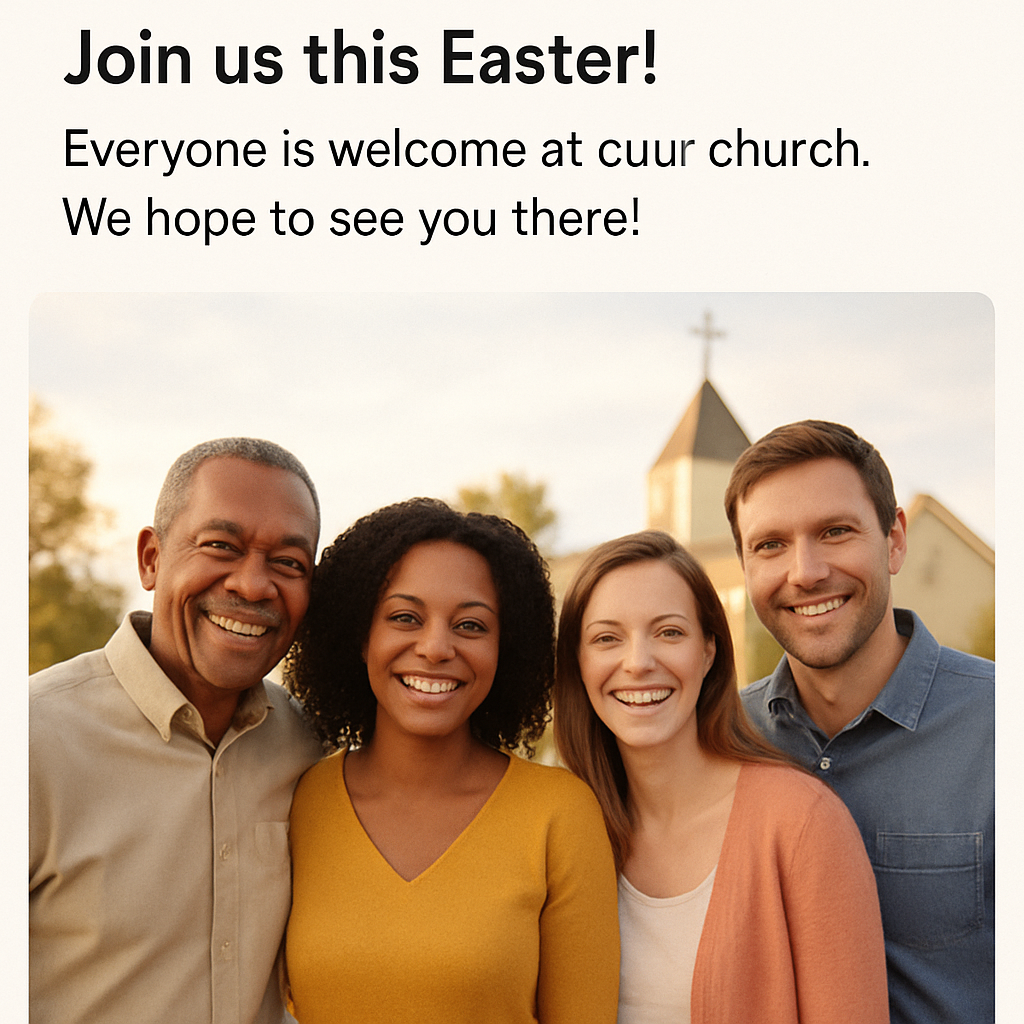
- A Warm Photo. The number one rule is to show people’s faces. Skip the empty sanctuary or a generic graphic. Use a recent, high-quality photo of your congregation smiling, worshipping, or serving together. People want to see who they’ll be meeting.
- A Welcoming Caption. Write as if you’re speaking to one person, not a crowd. Focus on the feeling of being invited and belonging.
- The Essential Details. Make it easy for them. Clearly list your Easter service times, physical address, and a link to the “Plan Your Visit” page on your website.
A common mistake is posting free Easter graphics found online. While the message “He is Risen” is central, a generic image doesn’t show the unique community a visitor will find at your church. A warm photo of your people paired with a personal caption is far more powerful. Here’s a simple template you can adapt:
This Easter, we’ve saved a seat for you. If you’re looking for a friendly church and a message of hope, we invite you to join us.
Service Times: [9:00 AM & 10:45 AM] Address: [123 Main Street, Anytown] Plan your visit here: [link to your website]
This combination transforms your post from an announcement into a heartfelt invitation. It shows a potential guest not just what is happening, but who they will meet.
Using Facebook Ads on a $50 Budget
Once you have that perfect invitation post, you need to ensure it reaches people outside your existing followers. The simplest way is by using the “Boost Post” button on your church’s Facebook page. Think of it less like a complicated ad and more like paying a small fee to have Facebook deliver your invitation to more mailboxes in your digital neighborhood.
The most powerful part of this tool is targeting. You can tell Facebook to show your invitation only to people living in your specific city, zip code, or within a 10-mile radius of your church. This ensures your budget is spent reaching your actual neighbors—the families who drive past your building every day.
For a small budget like $50 spread over the week or two before Easter, you can reach thousands of people in your local area. The goal isn’t complex analytics; it’s making sure the invitation gets seen by the community you’ve been called to serve.
Hyper-Local Outreach: Signs and Personal Invites
While digital outreach is key, don’t forget your physical community. Hyper-local marketing focuses on the streets immediately surrounding your church, where you have a natural advantage. It’s an effective way to reach people who are already your neighbors.
One of the best tools is the simple yard sign. For a sign to be readable in the three seconds someone has to see it from a car, it must be ruthlessly simple. Effective signs focus on just four things: your church’s name, your Easter service time, a welcoming phrase like “You’re Invited!”, and your website address. Clarity over clutter ensures your message is received.
Even more powerful is a personal invitation. Empower your congregation with a simple script to use with friends or neighbors: “Hey, if you don’t have plans for Easter, I’d love for you to join me at my church. Our service is at [Time], and it’s a really welcoming place. No pressure at all, but the invitation is there!” This simple ask is impactful because it’s built on real relationships.
Your 7-Day Communication Timeline
As Easter approaches, your communication should build anticipation without overwhelming your audience. A simple schedule creates a helpful rhythm of reminders to gently guide people toward Sunday.
- Palm Sunday: Announce the full Holy Week schedule in your bulletin and on social media.
- Wednesday: Post a “behind-the-scenes” photo of volunteers setting up or your band rehearsing. It makes the event feel real and personal.
- Good Friday: Share a reflective message and details for your Good Friday service.
- Saturday: Post a final, warm invitation: “We can’t wait to see you tomorrow! We have a seat saved for you.”
It’s important to shift your tone to match the day. Good Friday promotion should be somber and reflective, using contemplative language like, “Join us as we reflect on the sacrifice…” In contrast, your Easter posts should be full of life and joy, using bright photos of your church family. This tonal awareness shows you understand the spiritual journey of the week.
One of the most important communications is a reminder email sent on Wednesday or Thursday. People are busy, and your email can be the prompt that turns intention into action. Keep it simple and friendly, with all essential information: service times, address, and a link to your website.
The Guest Experience: What Happens Before the Sermon
You’ve sent the invitations; now the crucial part begins. To prepare, see your church through a visitor’s eyes. Park in the farthest spot, walk in a door you don’t normally use, and pretend you know nothing. Are the main entrance and kids’ areas clearly marked? This walkthrough is the best way to spot confusing areas.
The single biggest anxiety-reducer for a new family is clear signage. A family running late with young children doesn’t want a scavenger hunt. Simple, friendly signs for “Guest Parking,” “Main Entrance,” and especially “Kids’ Check-In” are a silent form of hospitality. This detail communicates that you were expecting them and are ready to serve them well.
Your greeting team provides the human touch. A powerful first impression goes beyond a simple “hello.” Equip your greeters with a three-part goal: offer a warm welcome (“We’re so glad you’re here!”), ask a helpful question (“Is this your first time with us?”), and provide a clear next step (“The auditorium is right through those doors.”). This proactive welcome makes guests feel seen and cared for.
The journey from the parking lot to the pew determines whether a guest’s heart is open. A welcoming physical space removes barriers and communicates value before the service even starts.
The Follow-Up: Turning a Visit into a Connection
After the final guest leaves, one last step can turn a pleasant visit into a lasting connection. The goal of church guest follow-up isn’t to pressure people to return, but to sincerely thank them for coming. This shift in perspective changes the dynamic from a sales pitch to genuine hospitality.
To contact guests, make gathering information feel like an act of service. Place a “Welcome Card” in your seats and invite guests to exchange it for a gift at a welcome desk—a free book, a coffee voucher, or a promise to donate $5 to a local charity on their behalf. This honors them without being intrusive.
A day or two later, a brief, warm email reinforces that welcome. Consider this non-pushy template: “Hi [Name], thank you so much for celebrating Easter with us! We hope the message of hope was an encouragement to you. If you have any questions, feel free to reply to this email. We hope to see you again soon!” This personal, pressure-free approach is a cornerstone of a thoughtful strategy.
Your Easter Plan: A Joyful Welcome
This four-part hospitality plan—a solid Foundation, a warm Invitation, a welcoming Experience, and a simple Follow-up—transforms scattered tasks into a complete strategy that serves your community.
To build momentum, take these three steps right now:
- Check your church’s Google Business Profile to ensure your service times and address are correct.
- Draft one social media post using a warm photo and an inviting caption.
- Walk from your parking lot to a seat in the sanctuary, seeing it all through a first-time guest’s eyes.
The goal isn’t just a higher attendance number. Success is one family feeling seen, one guest feeling genuinely welcomed, and one person discovering they have a place to belong. That is how a thoughtful plan helps share the ultimate message of hope and new beginnings.